
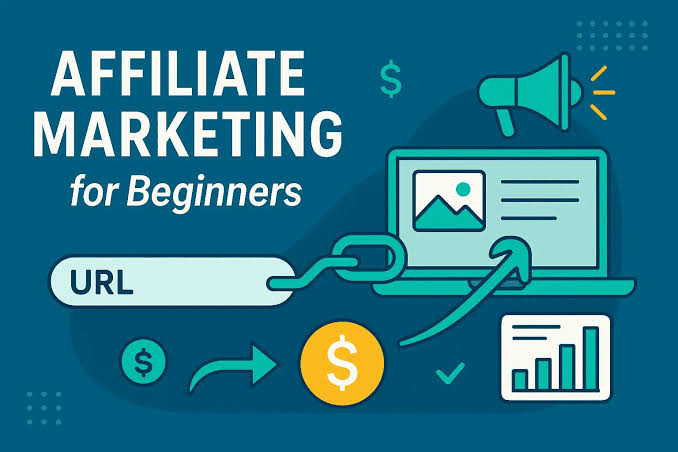
Every industry has its own language, and affiliate marketing is no exception. Whether you’re reading a network’s dashboard, negotiating a commission rate, or just trying to understand a forum discussion, unfamiliar jargon can slow you down and make the whole field feel more intimidating than it needs to be. This glossary breaks down 100 essential affiliate marketing terms in plain English, organized into categories so you can find what you need quickly and build a solid working vocabulary for the industry.
Core Concepts
Affiliate — A person or business that promotes another company’s products or services in exchange for a commission on resulting sales or actions.
Merchant (Advertiser) — The company that owns the product or service and pays commissions to affiliates for referred sales.
Affiliate Program — The specific partnership structure a merchant sets up, defining commission rates, rules, and available promotional materials.
Affiliate Network — A third-party platform that connects merchants and affiliates, hosting tracking technology, reporting, and payments for multiple programs.
Commission — The payment an affiliate earns for a successfully tracked sale, lead, or action.
Referral — A visitor or customer sent to a merchant’s site through an affiliate’s unique link.
Conversion — Any completed desired action, such as a sale or sign-up, resulting from affiliate traffic.
Niche — A specific, focused topic or market segment an affiliate builds their content and audience around.
Sub-Affiliate — An affiliate who is recruited and managed by another, larger affiliate, often sharing a portion of the commission with the recruiter.
Two-Tier Program — An affiliate structure where affiliates earn commissions both on their own referrals and on sales generated by sub-affiliates they recruit.
Tracking and Technology
Affiliate Link — A unique tracking URL assigned to an affiliate that identifies them as the source of a referral.
Cookie — A small file stored in a visitor’s browser that records which affiliate referred them, used to attribute later purchases.
Cookie Duration (Cookie Window) — The length of time a cookie remains active and eligible to credit a sale to an affiliate after the initial click.
Click ID — A unique identifier generated for each click, used to match a later sale back to the specific visit that produced it.
Server-to-Server (S2S) Tracking — A tracking method where the merchant’s server communicates directly with the network’s server to confirm a sale, bypassing reliance on browser cookies.
Postback URL — The specific URL used in server-to-server tracking to notify a network or affiliate that a conversion occurred.
Pixel Tracking — A tracking method using a small, invisible image loaded on a confirmation page to record a completed conversion.
UTM Parameters — Tags added to a URL that allow marketers to track the specific source, medium, or campaign that generated traffic.
Sub-ID — A custom tag affiliates add to their links to track performance of different traffic sources or content pieces individually.
Attribution — The process of determining which marketing channel or affiliate should receive credit for a conversion.
Last-Click Attribution — A model that credits the most recent referral source before a conversion, regardless of earlier touchpoints.
First-Click Attribution — A model that credits the very first referral source a customer interacted with, even if later touchpoints also contributed.
Multi-Touch Attribution — A model that distributes credit for a conversion across multiple touchpoints in a customer’s journey.
Fraud Detection — Systems and processes networks use to identify fake clicks, bots, or manipulated conversions.
Deep Linking — Creating an affiliate link that points directly to a specific product or page, rather than a merchant’s homepage.
Financial and Commission Terms
Commission Rate — The percentage or flat amount an affiliate earns per qualifying sale or action.
Flat-Rate Commission — A fixed dollar amount paid per conversion, regardless of the order’s total value.
Percentage Commission — A commission calculated as a percentage of the total sale amount.
Recurring Commission — Ongoing commission payments earned for as long as a referred customer remains subscribed to a service.
Tiered Commission — A structure where commission rates increase as an affiliate generates more sales or reaches specific performance milestones.
Pay-Per-Sale (PPS) — A commission model paying affiliates only when a referred visitor completes a purchase.
Pay-Per-Lead (PPL) — A commission model paying affiliates for a completed action, such as a form submission, regardless of an eventual sale.
Pay-Per-Click (PPC) — A model paying affiliates based on the number of clicks generated, independent of whether a sale occurs (less common in modern affiliate marketing).
Earnings Per Click (EPC) — A metric showing average affiliate earnings per hundred clicks sent to an offer, used to compare offer profitability.
Average Order Value (AOV) — The average dollar amount of orders placed through an affiliate’s referrals.
Holding Period (Pending Period) — The time a merchant waits before finalizing a commission, allowing for potential returns or cancellations.
Chargeback — A reversed transaction, typically due to fraud or a customer dispute, which usually cancels the associated affiliate commission.
Payment Threshold — The minimum earned balance required before a network or merchant will issue a payout.
Net-30 / Net-60 Terms — Payment schedules indicating commissions are paid 30 or 60 days after the close of the earning period.
Reversal — The cancellation of a previously credited commission, usually due to a refund, cancellation, or fraud finding.
Content and Marketing Terms
Content Marketing — Creating valuable, relevant content to attract and engage an audience, which in affiliate marketing often drives organic traffic to monetized pages.
Review Content — Content specifically evaluating a single product or service in depth, often a primary conversion driver in affiliate marketing.
Comparison Content — Content that evaluates multiple competing products side by side, helping readers choose between options.
Buying Guide — Educational content that helps a reader understand what to look for before making a purchase in a given category.
Listicle — A list-formatted article, such as “10 Best X for Y,” commonly used in affiliate content for its scannability and search performance.
Call-to-Action (CTA) — A prompt encouraging a reader to take a specific next step, such as clicking an affiliate link or signing up.
Lead Magnet — A free resource offered in exchange for an email address, used to build an audience for future affiliate promotion.
Email List — A collection of subscriber contacts an affiliate can market to directly, independent of search engine or social algorithms.
Funnel — The step-by-step journey a visitor takes from first discovering content to eventually completing a purchase.
Native Advertising — Promotional content designed to blend naturally with the surrounding editorial content rather than appearing as an obvious ad.
SEO and Traffic Terms
Search Engine Optimization (SEO) — The practice of improving a website’s visibility in organic search engine results.
Keyword Research — The process of identifying search terms an audience uses, which content is then built around.
Search Intent — The underlying goal behind a search query, such as researching, comparing, or being ready to buy.
Organic Traffic — Visitors who arrive at a website through unpaid search engine results.
Domain Authority — A third-party metric estimating a website’s overall search ranking strength based on its backlink profile and history.
Backlink — A link from another website pointing to your content, generally viewed by search engines as a signal of credibility.
On-Page SEO — Optimization techniques applied directly within a page’s content, structure, and HTML.
Technical SEO — Optimization focused on a website’s backend infrastructure, such as speed, crawlability, and mobile-friendliness.
Long-Tail Keyword — A longer, more specific search phrase that typically has lower search volume but higher buyer intent.
SERP (Search Engine Results Page) — The page of results displayed by a search engine in response to a query.
Algorithm Update — A change to a search engine’s ranking system that can significantly shift which content ranks for given queries.
Core Web Vitals — A set of Google metrics measuring real-world page loading speed, interactivity, and visual stability.
Compliance and Legal Terms
FTC Disclosure — A legally required statement informing readers that a piece of content contains affiliate links and the creator may earn a commission.
Affiliate Disclaimer — A general statement, often placed site-wide, explaining a website’s participation in affiliate programs.
Terms of Service (ToS) — The rules governing an affiliate’s participation in a specific program, including allowed and prohibited promotional methods.
Trademark Bidding — Using a merchant’s brand name in paid advertising, often restricted or banned under most affiliate program terms.
Cookie Stuffing — A fraudulent practice of placing affiliate cookies on a visitor’s browser without their knowledge or a genuine referral, strictly prohibited by all legitimate networks.
Brand Bidding — Purchasing paid search ads specifically targeting a merchant’s brand name, often restricted by affiliate agreements.
Platforms and Programs
Amazon Associates — Amazon’s affiliate program, one of the largest and most widely used in the world, known for its broad product range but relatively short cookie window.
ShareASale — A major affiliate network hosting thousands of merchant programs across diverse industries.
CJ Affiliate (Commission Junction) — One of the oldest and largest affiliate networks, known for hosting many well-established brand programs.
Impact — A modern affiliate and partnership management platform popular with SaaS and larger e-commerce brands.
Awin — A global affiliate network with strong representation across European and international merchant programs.
Rakuten Advertising — A long-standing affiliate network (formerly LinkShare) known for major retail partnerships.
In-House Affiliate Program — A program run directly by a merchant using their own software, without a third-party network as an intermediary.
Strategy and Advanced Terms
Niche Site — A website built specifically around a narrow topic, typically monetized through affiliate links and designed to rank in search engines.
Authority Site — A larger, more established website covering a broader topic area with a strong reputation and search ranking history.
Content Cluster — A group of related articles organized around a central “pillar” page, used to build topical authority for SEO.
Pillar Page — A comprehensive, central piece of content that links out to related, more specific articles within a content cluster.
Monetization — The overall strategy and methods used to generate revenue from an audience or piece of content.
Diversification — Spreading affiliate income across multiple programs, niches, or traffic sources to reduce dependency on any single one.
Seasonality — Predictable fluctuations in traffic or sales tied to specific times of year, common in gift-related or holiday-driven niches.
Evergreen Content — Content designed to remain relevant and continue driving traffic and conversions over a long period, without needing frequent updates.
A/B Testing — Comparing two versions of a page or element to determine which performs better in terms of clicks or conversions.
Heatmap — A visual tool showing where visitors click, scroll, or spend the most time on a page, used to optimize content and link placement.
Bounce Rate — The percentage of visitors who leave a site after viewing only one page, often used as a signal of content relevance.
Click-Through Rate (CTR) — The percentage of people who click a link out of everyone who viewed it.
Conversion Rate — The percentage of visitors who complete a desired action, such as a purchase, out of total visitors.
Return on Investment (ROI) — A measure of profitability comparing the money earned against the money or time invested.
Affiliate Manager — A person employed by a merchant or network responsible for recruiting, supporting, and managing affiliate relationships.
Exclusive Deal — A special offer, discount, or bonus negotiated specifically for an affiliate’s audience, not available through standard channels.
Product Feed — A structured data file listing a merchant’s products, prices, and details, used by affiliates to automatically display current offers.
White-Label Program — An affiliate arrangement where the affiliate can present the product under their own branding, though the underlying service is provided by the merchant.
Influencer Marketing — Promotional partnerships built around an individual’s audience and personal credibility, frequently overlapping with affiliate marketing structures.
Performance Marketing — A broader marketing category, encompassing affiliate marketing, in which advertisers pay only for measurable results rather than exposure.
Cross-Device Tracking — Technology attempting to connect a single user’s activity across multiple devices to preserve accurate attribution.
Deduplication — The process of ensuring a single sale isn’t mistakenly credited to multiple affiliates or marketing channels simultaneously.
Sunset Clause — A provision in an affiliate agreement specifying when or under what conditions a partnership or commission structure will end.
Putting the Vocabulary to Work
Knowing these terms isn’t just about sounding informed — it directly affects how well you can evaluate programs, read performance reports, negotiate with affiliate managers, and troubleshoot problems when commissions don’t match your expectations. As you gain experience, you’ll naturally encounter more specialized or platform-specific terminology, but this core vocabulary covers the vast majority of what you’ll need to navigate affiliate marketing confidently, whether you’re just starting out or already managing multiple programs.