
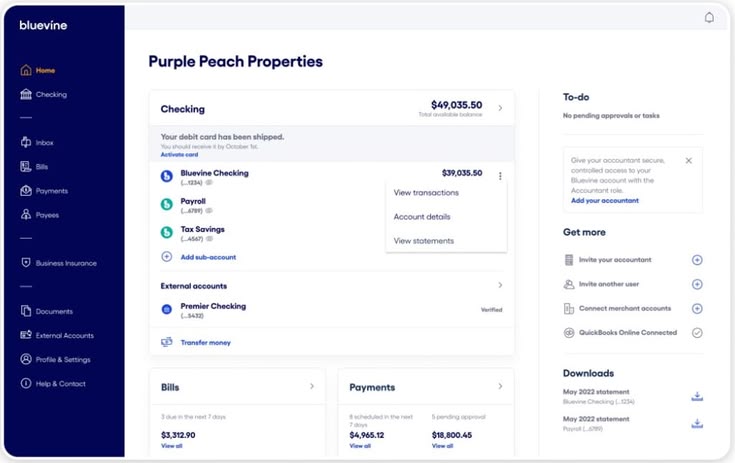
Bluevine started out as a business lending company before expanding into full business banking, and that lending background still shows up in how its product is put together today — a business checking account that pairs no fees and interest-bearing balances with a genuine line of credit option, all under one roof. This review covers what Bluevine offers, how its interest and fee structure actually works, and who benefits most from choosing it.
Bluevine’s Origins and Evolution
Bluevine originally built its reputation as an online small business lender, offering lines of credit and invoice factoring to businesses that often struggled to get approved through traditional bank lending channels. Over time, the company expanded into full business checking, layering a modern deposit account on top of its existing lending expertise. This history is part of why Bluevine’s checking account and lending products feel like a genuinely integrated offering rather than a banking product with lending bolted on as an afterthought.
Bluevine Business Checking: Core Features
Bluevine’s business checking account charges no monthly maintenance fee and has no minimum balance requirement, putting it in the same fee-free category as competitors like Novo and Mercury. What sets it apart is that it also pays interest on qualifying balances, a combination that’s relatively uncommon — many no-fee accounts pay no interest at all, while many interest-bearing business accounts come with monthly fees or minimum balance requirements to access that interest.
How Bluevine’s Interest Tiers Work
Bluevine’s interest is generally structured in tiers, meaning the rate you actually earn can depend on factors like your account balance or meeting certain account activity requirements (such as a minimum number of debit card transactions per month, in some account structures). It’s worth reviewing Bluevine’s current specific tier requirements directly, since meeting a slightly higher threshold could unlock a meaningfully better rate, and the requirements can shift over time as Bluevine adjusts its product.
Cash Deposits Through Retail Partnerships
One of the more distinctive things Bluevine has done to address a common online-only banking limitation is partner with retail locations to allow fee-free or low-cost cash deposits, letting Bluevine customers deposit cash without needing to visit a traditional bank branch. This is a genuine differentiator for a business that handles some cash but otherwise wants the fee and interest advantages of an online-only account, since many competitors in this space offer no cash deposit solution at all.
Bluevine Lines of Credit
Reflecting its lending origins, Bluevine offers business lines of credit directly integrated with its checking account, letting a business apply for and, if approved, draw on a line of credit without needing to establish a separate lending relationship elsewhere. This can be particularly valuable for a business that wants quick access to short-term financing for cash flow gaps, inventory purchases, or unexpected expenses, especially since the application process leverages the financial data and history the business already has within Bluevine’s platform.
How Bluevine’s Lending Compares to Traditional Bank Loans
Bluevine’s lending products are generally faster to apply for and receive a decision on compared to traditional bank small business loans, reflecting its fintech, data-driven underwriting approach. This speed can come with tradeoffs, such as potentially higher rates compared to what a business with an excellent credit history and an established, long-term traditional bank relationship might qualify for elsewhere. For a business that values speed and accessibility over potentially securing the very lowest possible rate, Bluevine’s lending products offer a meaningful and convenient option.
Multiple Sub-Accounts
Bluevine also offers the ability to create multiple checking sub-accounts, letting a business separate funds for different purposes (similar in spirit to what Relay offers, though Relay’s structure is generally considered more extensive, supporting up to twenty accounts). For a business that wants some structural separation of funds but doesn’t need Relay’s full range of accounts, Bluevine’s sub-account feature can offer a reasonable middle ground within a single integrated platform that also includes lending and interest-bearing checking.
Bill Pay and Accounts Payable Tools
Bluevine includes built-in bill pay functionality, letting a business manage and pay vendor bills directly through the platform, which can reduce the need for a separate accounts payable tool for a small business with straightforward vendor payment needs. This integrates with Bluevine’s broader financial picture, giving a business owner a single dashboard to view checking balances, upcoming bills, and available credit line capacity together.
Debit Card and Expense Management
Bluevine offers a business debit card with standard expense tracking and categorization tools built into its dashboard, helping business owners understand spending patterns without needing to export data into a separate tool for basic categorization and review, though more advanced expense management needs (like detailed per-employee spend controls at scale) may be better served by a platform built more specifically around team expense management.
Integration With Accounting Software
Bluevine integrates with popular accounting platforms like QuickBooks Online, letting transaction data sync automatically rather than requiring manual reconciliation, which is a standard and expected feature among modern online-only business banks but worth confirming directly if you rely on a specific accounting tool not explicitly listed among Bluevine’s supported integrations.
FDIC Insurance Structure
As with other fintech banking platforms, Bluevine itself is not a bank; it partners with FDIC-insured banks to actually hold customer deposits. It’s worth understanding which specific partner bank holds your funds and confirming your balance is within standard FDIC coverage limits, particularly if your business tends to carry a larger reserve balance, since coverage structures and partner banks can evolve over time.
Who Benefits Most From Bluevine’s Combined Approach
Bluevine is particularly well-suited to a small business that wants meaningful interest on its checking balance without paying a monthly fee, values the convenience of potentially accessing a line of credit through the same platform where its everyday banking already lives, and occasionally needs to deposit cash but doesn’t want to give up the advantages of an online-only account entirely. This combination of features — interest, credit access, and cash deposit support — makes Bluevine one of the more well-rounded options in the online-only business banking category, rather than one that excels in a single narrow area.
Where Bluevine Is Less Competitive
Compared to Mercury, Bluevine doesn’t offer the same depth of treasury management tools for very large cash balances, making it less naturally suited to a well-funded startup managing a significant post-funding-round reserve. Compared to Relay, its sub-account structure is less extensive, making it a less ideal fit for a business that wants to implement a highly granular, many-category cash management system. Compared to Found or Lili, it lacks freelancer-specific tax tools, making it a less specialized fit for a solo freelancer whose primary need is simplified tax tracking.
Customer Support
Bluevine offers customer support through phone, chat, and email, giving business owners a bit more direct contact flexibility than some purely chat-based online competitors, though it still lacks the option of in-person branch support that a traditional bank would offer.
Getting Started With Bluevine
Opening a Bluevine account is done entirely online, typically requiring basic business information, an EIN or Social Security Number depending on business structure, and identity verification, with approval often completed within a short timeframe compared to a traditional bank’s business account application process.
Questions Business Owners Commonly Ask About Bluevine
A frequent question is whether applying for a Bluevine line of credit affects the terms or standing of an existing Bluevine checking account. Applying for credit is generally a separate process from the checking account itself, and being declined for a line of credit (which can happen based on standard underwriting factors like time in business, revenue, and credit history) doesn’t affect your ability to continue using Bluevine’s checking and interest-bearing features normally, so it’s reasonable to open a checking account first and consider the credit line separately once your business has enough operating history to strengthen an application.
Another common question is how Bluevine’s interest rate compares to simply moving reserve funds into a completely separate high-yield savings account elsewhere. This is worth comparing directly and periodically, since dedicated high-yield savings products at other providers sometimes offer a better rate than what’s available through a business checking account’s tiered interest structure. For many business owners, though, the convenience of earning interest without needing to actively manage transfers between multiple institutions is worth a small rate difference, particularly for a balance that isn’t so large that the gap becomes financially significant.
People also ask whether Bluevine is a good fit for a business that’s just starting out with little to no revenue history. Since Bluevine’s checking account itself doesn’t require revenue history to open, it’s a reasonable starting point even for a brand-new business, though access to the higher interest tiers or approval for a line of credit will generally depend on the business building up some operating history and revenue over time.
Final Thoughts
Bluevine has positioned itself as one of the more well-rounded online-only business banking options by combining a genuinely fee-free, interest-bearing checking account with integrated lending products and a workable solution for occasional cash deposits. It’s a particularly strong choice for a small business that wants to earn interest on its operating balance and values having quick access to a line of credit without establishing a separate lending relationship. For businesses with more specialized needs — deep multi-account structuring, startup-specific treasury tools, or freelancer tax features — a more specialized competitor may ultimately serve those specific needs better, but as a well-rounded generalist option, Bluevine holds up well.