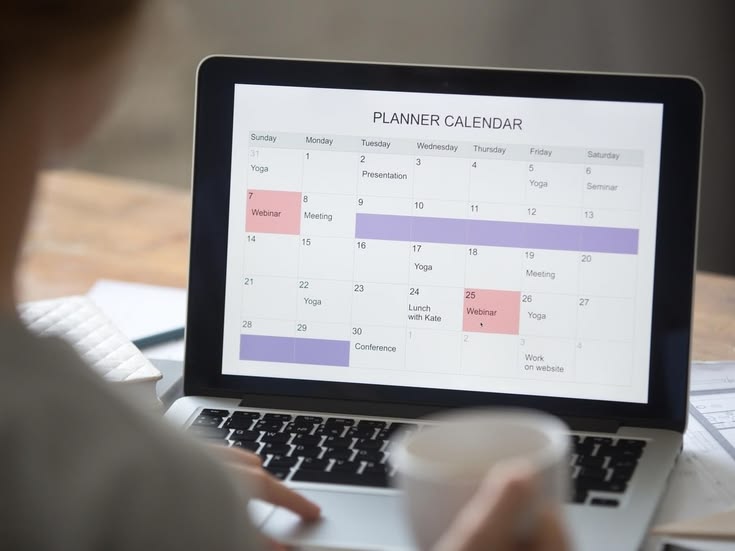
Nearly every marketing team has, at some point, built a beautiful, ambitious content calendar full of color-coded posts and carefully planned themes — and then quietly abandoned it within a few weeks when real life and shifting priorities got in the way. The problem is rarely a lack of good intentions or planning tools. It’s that most content calendars are built around an idealized version of how a team will operate, rather than the realistic, sometimes messy way marketing teams actually work week to week. A content calendar that “sticks” is one that’s designed from the start to survive contact with reality.
This guide walks through the practical principles and structure behind content calendars that actually get used consistently, month after month, rather than becoming another abandoned spreadsheet.
Start With Capacity, Not Ambition
The single most common reason content calendars fail is that they’re built around how much content a team wishes it could produce, rather than how much it can realistically and sustainably produce given actual available time, staffing, and approval processes. A calendar that plans for five blog posts a week when the team has capacity for two will inevitably fall behind, and once a calendar falls behind, the natural response is often to abandon it rather than continually renegotiate an unrealistic plan.
Before building anything, do an honest capacity audit: how many hours per week does your team actually have available for content creation, review, and publishing, accounting for all the other responsibilities competing for that same time? Build your calendar’s volume and cadence around that real number, not around a more aggressive number that sounds better in a planning meeting. It’s far better to consistently deliver a modest, sustainable content cadence than to sporadically deliver an ambitious one that regularly collapses under its own weight.
Choose a Cadence You Can Defend Under Pressure
Related to capacity, it’s worth explicitly deciding on a cadence for each content type and channel that your team can maintain even during a busy or difficult period, not just during an ideal week. A weekly blog post commitment that only survives when nothing else is going on isn’t a real commitment — it’s an aspiration that collapses the first time a product launch or a personnel change disrupts the normal rhythm.
A useful test: imagine your busiest, most chaotic week from the past six months, and ask honestly whether your planned cadence would have survived that week. If not, the cadence is probably too ambitious for a calendar that needs to stick long-term. It’s generally better to under-promise on frequency and consistently deliver than to plan an ideal-case cadence that only holds up in ideal conditions.
Structure Around Pillars, Not Just a Random Grid of Dates
A content calendar that’s just a grid of dates waiting to be filled in tends to produce last-minute scrambling, because there’s no underlying system generating ideas — every week starts from a blank slate. A more durable structure organizes content around a small number of consistent content pillars or themes (for example: educational how-to content, customer stories, industry commentary, and product updates), with each pillar having a defined rough frequency (say, two educational posts and one customer story per month).
This structure does two things that make a calendar much easier to sustain. It gives the team a starting framework for generating new ideas rather than staring at a blank calendar each planning cycle, and it naturally creates a varied, balanced content mix rather than accidentally over-indexing on whichever type of content happens to be easiest to produce that particular week.
Batch Planning and Batch Production Separately
One of the most effective structural habits for content calendars that stick is separating the planning phase from the production phase, and doing each in a dedicated batch rather than constantly switching between “what should we post” thinking and “let’s actually write this” thinking throughout the week. Many successful content teams run a single planning session — weekly, biweekly, or monthly depending on team size — where the specific topics, angles, and assignments for the upcoming period are decided all at once, informed by the pillar structure described above.
Production then happens as a separate, focused activity, ideally also batched — writing several social captions in one sitting, or drafting multiple blog posts across a single focused writing block, rather than constantly context-switching between planning and creating throughout the week. This batching approach significantly reduces the cognitive overhead of constantly deciding what to create next, which is often the exact friction point that causes calendars to quietly fall apart.
Build In Buffer Content
Calendars that assume every single planned piece of content will be produced exactly on schedule are fragile by design, because real content production always has some rate of delay, cancellation, or last-minute change. A content calendar that sticks includes a buffer — a small library of evergreen, non-time-sensitive content that can be slotted in whenever a planned piece falls through, rather than leaving a gap in the schedule or scrambling to produce something new under pressure.
Maintaining even a modest backlog of five to ten pieces of ready-to-publish, non-time-sensitive content (general educational posts, evergreen tips, foundational brand content) gives the calendar genuine resilience against the inevitable disruptions that would otherwise derail an unbuffered schedule.
Use Tools That Match Your Team’s Actual Habits
The specific software you use for the calendar matters less than most people assume, but it’s still worth choosing a tool that fits how your team already works rather than forcing a new habit on top of existing ones. Teams already living inside project management tools like Asana, Trello, or Monday.com are often better served building the content calendar directly inside that existing system, rather than adopting a separate, dedicated content calendar tool that requires an extra login and an extra habit to maintain. Teams that specifically need to visualize and coordinate social media scheduling across multiple platforms often benefit from dedicated social scheduling tools like Later, Buffer, or Hootsuite, which combine calendar visualization with the actual publishing mechanism, reducing the gap between planning and execution.
The core principle: the best content calendar tool is the one your team will actually open and update consistently, not necessarily the one with the most features.
Assign Clear Ownership for Every Piece
A calendar with content listed but no clear individual owner attached to each piece tends to produce a diffusion-of-responsibility problem, where everyone assumes someone else is handling it and nothing actually gets done. Every item on a sticky content calendar should have one clearly designated owner responsible for seeing it through from draft to publication, even if multiple people contribute along the way. This doesn’t need to be complicated — a simple assigned-to column is often enough — but it needs to be consistently applied, since ambiguous ownership is one of the most common quiet causes of calendars falling behind.
Build in a Regular Review and Adjustment Rhythm
A content calendar that’s set once and never revisited will inevitably drift out of alignment with what’s actually working, since audience response, business priorities, and team capacity all shift over time. Building in a regular, lightweight review — monthly is often a reasonable cadence for most teams — where you look honestly at what content actually got published versus what was planned, and what performed well versus what didn’t, keeps the calendar a living, evolving system rather than a static plan that quietly becomes irrelevant.
This review doesn’t need to be elaborate. A short conversation covering three questions is often enough: What did we actually manage to publish versus plan? What performed notably well or poorly, and why? And does our cadence or pillar mix need any adjustment based on what we’re learning? Teams that build this review habit tend to catch and correct calendar drift early, before it accumulates into the kind of overwhelming gap that leads to full abandonment.
Use AI to Reduce Planning and Production Friction
AI tools genuinely help content calendars stick by reducing the friction at exactly the points where calendars tend to break down. AI writing tools can quickly generate a batch of topic ideas within each content pillar during a planning session, removing the blank-page problem that often slows planning meetings down. AI tools can also speed up the actual production step — drafting a first version of a social caption or blog outline faster than starting from scratch — which directly increases the odds that a scheduled piece of content actually gets finished on time rather than slipping.
The caveat, covered in more depth elsewhere, is that AI-assisted speed shouldn’t come at the cost of skipping a genuine human review and voice pass before publishing — a calendar that sticks by publishing rushed, unedited content isn’t actually succeeding at its real goal.
Avoid Over-Planning Too Far in Advance
It might seem like planning several months of content in extreme detail upfront would create stability, but in practice, overly detailed long-range planning often backfires, because business priorities, trending topics, and team capacity all shift in ways that make highly specific plans from months earlier feel stale or irrelevant by the time they’re due to be published. A more sustainable approach plans content pillars and general cadence further in advance, while leaving the specific topics and angles within each pillar to be finalized closer to the actual production window, where you can incorporate current events, recent audience feedback, and up-to-date business priorities.
The Bottom Line
A content calendar sticks not because of a clever template or a particular piece of software, but because it’s built around your team’s real capacity, structured around a sustainable pillar system rather than a blank grid, buffered against inevitable disruptions, clearly owned at the individual item level, and regularly reviewed and adjusted rather than treated as a fixed, unchangeable plan. The goal isn’t to build the most ambitious calendar possible — it’s to build the most sustainable one, since a modest calendar that survives six months of real-world use will always outperform an ambitious one abandoned after three weeks.
Frequently Asked Questions
What’s the ideal length of time to plan a content calendar in advance? Most sustainable calendars plan pillars and general cadence one to three months ahead, while finalizing specific topics and angles two to four weeks before publication, which balances enough lead time for quality production against staying responsive to current events and shifting priorities.
Should small teams and large teams structure their calendars differently? Yes, mainly in terms of tooling and ownership structure. Small teams often do fine with a simple shared spreadsheet or single Trello board, while larger teams with more contributors typically need more structured project management tools with clearer approval workflows to avoid confusion over ownership and status.
What should we do if we fall significantly behind our calendar? Resist the urge to abandon it entirely. Instead, hold a short reset session: honestly reassess your team’s real capacity, trim the plan to match that capacity, and rebuild momentum with a smaller, more achievable near-term plan rather than trying to catch up on everything that was missed all at once.