Ecommerce brands have unique email and SMS marketing needs that general-purpose platforms often don’t address particularly well — deep store integrations, revenue attribution, abandoned cart recovery, and behavior-based segmentation built around purchase history rather than generic engagement metrics. Omnisend, Klaviyo, and Drip have each built strong reputations specifically within the ecommerce space, but they differ significantly in pricing philosophy, feature depth, and the type of store they’re best suited to serve.
Understanding how these three platforms compare across the factors that matter most to ecommerce businesses can help store owners avoid choosing a platform that’s either more complex than they need or not powerful enough to support their growth.
Overall Positioning
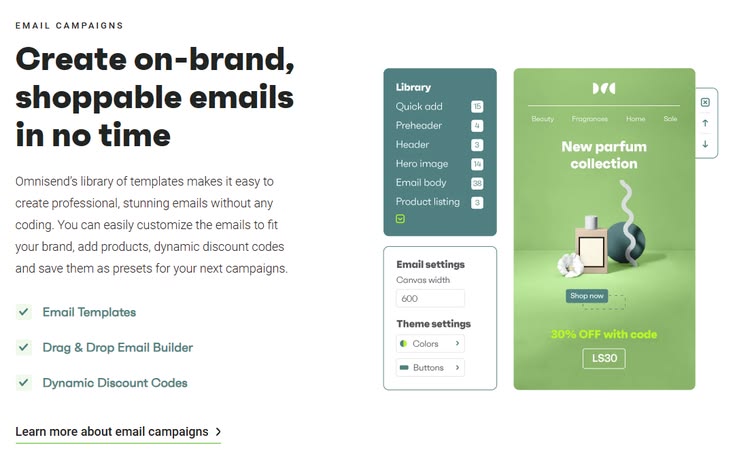
Omnisend is designed specifically for ecommerce brands that prioritize out-of-the-box workflows that work immediately with platforms like Shopify, offering a fast setup with fewer decisions required, making it particularly appealing to store owners who want to hit the ground running without a long implementation process. Klaviyo positions itself as the platform for brands wanting the deepest possible customer data insights and predictive analytics, appealing especially to established brands with a dedicated email marketing owner and the budget and expertise to fully utilize its capability. Drip positions itself as an “ecommerce CRM,” a term the company uses to describe a platform blending email marketing automation with customer data management specifically for ecommerce brands that have outgrown basic email platforms but aren’t ready for Klaviyo’s pricing or complexity.
Free Plan and Entry-Level Pricing
Omnisend offers the most generous entry point of the three, with a free plan covering up to 250 contacts and 500 emails per month that includes access to every feature on the platform, including segmentation, automation, and multichannel sends — a meaningful advantage for stores wanting to test the platform’s full capability before paying anything. Beyond the free tier, Omnisend’s paid plans are generally positioned as more cost-effective for ecommerce businesses than Klaviyo, offering multichannel marketing features even at lower price points.
Klaviyo’s free plan is comparatively limited to basic email features, and the platform’s paid pricing scales based on active subscriber profiles rather than send volume, meaning costs increase directly with list growth regardless of how frequently that list is actually emailed. This billing model, combined with the absence of a yearly plan option to blunt rising costs, means Klaviyo’s monthly cost can accelerate meaningfully as a store’s subscriber base grows, which has driven many smaller stores to explore alternatives once they scale past a certain point.
Drip does not offer a free plan, starting instead at a flat monthly rate with every feature included regardless of tier, which some ecommerce brands find appealing for its pricing predictability compared to the tiered, feature-gated structures used by the other two platforms.
Segmentation and Customer Insights
Klaviyo is widely regarded as the strongest of the three when it comes to segmentation depth and customer insights, offering advanced predictive analytics and the ability to build highly granular segments based on purchase behavior, browsing activity, and predicted future actions. For brands with the resources and expertise to fully leverage this capability, Klaviyo is genuinely difficult to outgrow, offering room to build increasingly sophisticated, data-driven campaigns over time.
Omnisend offers solid segmentation as well, with unlimited segments available even on its free plan, though its analytics generally don’t reach the same predictive depth as Klaviyo’s. Drip similarly focuses on using ecommerce platform data, particularly from Shopify, to build deep customer insights, though its approach leans more toward straightforward behavioral automation than Klaviyo’s more advanced predictive modeling.
Ease of Use and Setup Time
This is one of the more consistently cited differentiators among the three platforms. Omnisend is frequently praised for offering a faster setup with fewer decisions required than its competitors, making it ideal for store owners who want to get campaigns running quickly without a steep learning process. Drip also has a strong reputation for clean workflow design, with a user interface widely considered genuinely easier to navigate than Klaviyo’s.
Klaviyo, by contrast, can feel dense for a small team, and onboarding often takes longer than users initially expect, given the platform’s depth and the number of configuration options available. This complexity is part of why Klaviyo tends to be recommended primarily for brands with a dedicated person or team managing email marketing, rather than smaller operations without that dedicated capacity.
Channel Breadth
Multichannel capability differs meaningfully across the three. Omnisend includes native SMS messaging and web push notifications even on its lower-tier and free plans, allowing store owners to coordinate messaging across multiple channels from a single platform without needing separate tools. Klaviyo also offers native SMS and push notification capability, paired with what is generally considered the largest integration library among the three platforms, giving advanced marketers substantial room to connect additional tools and data sources.
Drip’s channel focus leans more heavily toward email and SMS with deep Shopify data integration, rather than positioning itself as broadly multichannel in the way Omnisend does, reflecting its more targeted ecommerce CRM positioning.
Integration Ecosystem
Klaviyo supports the widest range of ecommerce platforms and third-party tools through its App Marketplace, integrating with over 350 apps spanning ecommerce platforms, CRMs, and other marketing tools. Omnisend integrates with roughly 200 apps directly, including Zapier, which extends its effective integration reach to thousands of additional tools indirectly. For stores using widely supported platforms like Shopify or WooCommerce, both platforms offer strong native integration, meaning the raw integration count matters most for stores using more niche or specialized tools that only one platform supports natively.
Automation and Workflow Design
All three platforms offer visual automation builders with pre-built workflows for common ecommerce use cases like abandoned cart recovery, welcome series, and post-purchase follow-up. Klaviyo’s automation capability is generally considered the most advanced of the three, particularly for brands wanting highly customized, multi-branch automation informed by predictive data. Drip’s workflow design is often highlighted specifically for its clean, intuitive interface, making complex automations easier to build and understand than in Klaviyo, without necessarily sacrificing meaningful capability.
Omnisend’s automation covers the core ecommerce use cases thoroughly and is generally considered to cover roughly ninety percent of what Klaviyo offers for a typical Shopify or WooCommerce store, without requiring the same setup time or learning investment.
Pricing at Scale
As stores grow their subscriber lists, the cost differences between these platforms become increasingly significant. Because Klaviyo bills based on active profile count, costs scale directly with list size regardless of send frequency, which can become expensive for stores with large but only moderately active lists. Drip and Omnisend both tend to offer more predictable, often lower, costs at scale, making them attractive options for stores that have outgrown a basic email platform but want to avoid Klaviyo’s steeper pricing curve as their list continues to grow.
Which Platform Fits Which Store
For high-ticket ecommerce stores and most stores generally seeking a strong balance of price, features, and setup speed, Omnisend is frequently the recommended starting point, with many practitioners suggesting stores only consider moving to Klaviyo once they significantly outgrow Omnisend’s capability — a threshold that, for many stores, doesn’t arrive until well past six figures in monthly revenue. Established brands with a dedicated email marketing function, a healthy budget, and a genuine need for deep predictive analytics and the widest possible integration library are the clearest fit for Klaviyo, where the platform’s power can be fully utilized rather than left underused.
Drip fits a middle ground particularly well: ecommerce brands between roughly 1,000 and 100,000 contacts that want strong behavioral automation and a clean, easy-to-navigate interface without Klaviyo’s pricing curve or steeper learning investment, especially direct-to-consumer brands wanting to personalize the customer journey without excessive platform complexity.
Conclusion
Omnisend, Klaviyo, and Drip each serve the ecommerce email and SMS marketing space well, but from different angles suited to different store sizes and priorities. Omnisend offers the most accessible, cost-effective entry point with strong multichannel capability out of the box, making it a sensible default for most growing stores. Klaviyo offers the deepest data and segmentation power, best suited to established brands with dedicated resources to fully leverage its complexity. Drip occupies a practical middle ground, offering strong ecommerce-focused automation with a notably cleaner interface than Klaviyo, appealing to mid-market brands that have outgrown basic tools but don’t yet need Klaviyo’s full depth. Matching the platform to a store’s current size, growth trajectory, and available marketing resources — rather than defaulting to the most talked-about option — is the clearest path to a decision that will actually serve the business well.