If you have spent any time in a personal finance forum, you have run into someone evangelizing YNAB. The app has one of the most loyal user bases in the budgeting software world, and it earns that loyalty by asking more of you than almost any competitor. YNAB is not a passive tracker that watches your spending happen. It is an active system that forces you to decide, in advance, what every dollar in your account is going to do. For some people, that is life-changing. For others, it is more structure than they ever wanted from a phone app.
This review breaks down what YNAB actually costs in 2026, how the Four Rules methodology works in practice, who genuinely benefits from paying for it, and where the app falls short. By the end, you should have a clear answer to the question everyone asks before they commit: is YNAB worth $109 a year?
What Exactly Is YNAB?
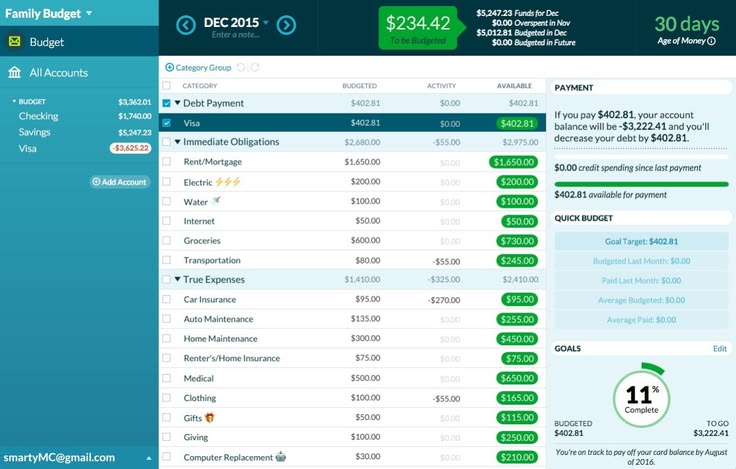
YNAB stands for You Need a Budget, and it has been around since 2004, starting life as a spreadsheet before evolving into the subscription-based app it is today. It runs on iOS, Android, the web, and Apple Watch, and it syncs across all of them. The company has built its identity around a specific philosophy called zero-based budgeting, sometimes referred to as “give every dollar a job.” Instead of just watching money flow in and out of your accounts, YNAB requires you to assign every dollar of income to a category the moment it arrives, until your income minus your allocations equals zero.
That is a meaningfully different experience than apps like Monarch Money or Copilot, which are built primarily to show you what already happened to your money. YNAB wants to shape what happens to your money before you spend it.
How Much Does YNAB Cost?
YNAB runs on a single-tier subscription model. There are no feature-gated plans, no “basic” versus “premium” split, and no ads. You get the full product no matter how you pay.
- Monthly plan: $14.99 per month
- Annual plan: $109 per year, which works out to roughly $9.08 per month
- Free trial: 34 days, no credit card required
- Student discount: full-time college students with a valid .edu email can get a full year free through YNAB’s college program
One subscription covers up to six people, so a couple or family sharing one budget does not need separate accounts. There is no permanent free tier, which puts YNAB toward the more expensive end of the budgeting app market. For comparison, Monarch Money’s Core plan runs about $99.99 a year, EveryDollar Premium is $79.99 a year, and PocketGuard Plus is roughly $74.99 a year. YNAB is not the cheapest option, but it is also not wildly out of line with the rest of the premium tier — it is simply priced at the top of it.
It is also worth noting that YNAB’s pricing has increased more than once since the company moved to a subscription model, a point that shows up frequently in long-time user reviews. There is no announced plan for another increase as of this writing, but anyone budgeting for the long term should factor that history into their decision.
The Four Rules, Explained Simply
YNAB’s entire methodology rests on four rules, and understanding them is the fastest way to understand whether the app fits how you think about money.
Rule One: Give every dollar a job. When money arrives, you immediately decide what it is for — rent, groceries, an emergency fund contribution, a vacation fund. Nothing sits unassigned.
Rule Two: Embrace your true expenses. Large, irregular costs like car insurance, annual subscriptions, or holiday gifts get broken into monthly savings targets instead of blindsiding you once a year.
Rule Three: Roll with the punches. If you overspend in one category, you move money from another category to cover it rather than treating the whole month as a failure. The budget flexes instead of breaking.
Rule Four: Age your money. The long-term goal is to spend money that is at least a few weeks old, meaning you are living on last month’s income rather than this month’s paycheck. This is the metric YNAB tracks to show you are building a real buffer.
Together, these rules turn budgeting from a monthly guessing game into an ongoing decision-making system. That is the core of why fans are so enthusiastic: the app does not just report your financial reality, it actively changes your behavior around it.
Bank Syncing and Privacy
YNAB connects to your bank accounts through Plaid, the same aggregator used by most modern budgeting apps, and it also supports manual transaction entry for anyone who would rather not link accounts at all. One detail that matters to privacy-conscious users: YNAB is funded entirely by subscriptions. It does not run ads, sell user data, or take referral commissions from partner banks or credit cards, which puts its privacy posture ahead of many “free” competitors that monetize your financial data behind the scenes.
International bank coverage is a real limitation, though. YNAB relies on Plaid in the US and TrueLayer in the UK, but it has no native open banking integration for continental Europe. Users in Germany, France, Poland, Spain, and the Nordic countries generally have to import transactions manually, which is a meaningful daily-use tradeoff if you live outside the US or UK.
What You Actually Get for the Price
A YNAB subscription includes the mobile apps, full web access, unlimited budget categories, goal tracking for savings and debt payoff, a built-in debt paydown calculator, detailed spending reports, and shared budgeting for up to six people on one account. There are no paywalled features beyond the subscription itself, which is a genuine point of difference from apps like Monarch or EveryDollar that increasingly split their user base into tiers.
YNAB also offers live workshops and an active online community, which matters more than it might sound like on paper. Budgeting apps live or die on whether people actually keep using them past month three, and YNAB has invested heavily in onboarding education — video classes, a well-regarded blog, and responsive customer support — specifically to keep new users from abandoning the method before it clicks.
Who YNAB Is Actually Worth It For
YNAB earns its subscription price for a specific type of user, and it is worth being honest about who that is:
- People who are trying to break a paycheck-to-paycheck cycle and need a system that forces proactive decisions rather than passive observation
- Anyone actively paying down debt who wants a structured system tied directly to that goal
- Couples or families who want a single shared budget with real-time visibility for everyone involved
- People who have tried “set it and forget it” tracking apps before and found that just seeing the numbers was not enough to change their habits
If you fall into one of these groups, the math tends to work in YNAB’s favor quickly. Users frequently report that the app pays for itself within a couple of months simply by surfacing wasted spending they were not tracking closely before.
Who Should Look Elsewhere
YNAB is not the right fit for everyone, and pretending otherwise would not do you any favors.
- If you want a tool that mostly watches your spending and shows you dashboards without requiring daily engagement, a passive tracker like Monarch Money or Copilot Money will suit you better.
- If your budget is extremely tight and even $9 a month feels like a stretch, Goodbudget’s free tier or EveryDollar’s free plan cost nothing.
- If you live outside the US or UK, the lack of native open banking support in the rest of Europe is a real daily friction point.
- If you know from experience that you will not check the app more than once a month, YNAB’s active methodology will not save you money — it only works if you actually use it the way it is designed to be used.
YNAB vs. the Alternatives at a Glance
It helps to see YNAB next to its closest competitors on price alone. Monarch Money Core costs about $99.99 a year and leans more toward passive net worth and investment tracking than active budgeting. EveryDollar, built by Ramsey Solutions around the same zero-based philosophy, has a genuinely usable free tier but charges $79.99 a year for its Premium plan with bank syncing. Copilot Money, at roughly $95 a year, is gorgeous but Apple-only and more of a spending tracker than a budgeting enforcer. PocketGuard’s Plus tier, around $74.99 a year, focuses on a single “safe to spend” number rather than full category-level budgeting. Among all of these, YNAB is the most expensive on a pure annual basis, but it is also the most opinionated about actually changing your financial behavior rather than just reporting it back to you.
Common Complaints Worth Knowing About
No app is perfect, and it is worth going in with clear eyes about YNAB’s weaknesses. The most consistent complaint is price, especially from long-time users who remember when the annual cost was significantly lower. The learning curve is real: the Four Rules take most new users two to four weeks to internalize, and the first month of any budget is almost always messy as you calibrate your categories to your actual spending patterns. Manual categorization can also pile up if you go more than a few days without opening the app, since YNAB’s auto-categorization is decent but not as sophisticated as Copilot’s AI-driven system. And because there is no free tier, you cannot dabble indefinitely — the 34-day trial is generous, but eventually you either pay or lose access.
Final Verdict
YNAB is worth the subscription if you are willing to treat budgeting as an active weekly habit rather than a once-a-month glance at a dashboard. The Four Rules genuinely change how people relate to money, and the lack of paywalled features, ad-free experience, and clean privacy policy make the $109 annual price feel more justified than it might look at first glance. If you are debt-free, financially comfortable, and mostly want a pretty way to watch your net worth grow, you will likely get more value per dollar from Monarch Money or Copilot. But if you are trying to fundamentally change your relationship with your paycheck, YNAB remains the gold standard for a reason — and for most people who stick with it past the first bumpy month, the subscription pays for itself many times over in avoided overspending and clearer financial decisions.
Before you commit to a full year, take advantage of the 34-day free trial and actually build out a real budget with your real numbers. The method either clicks within those five weeks or it does not, and that trial period is the cheapest way to find out which camp you fall into.