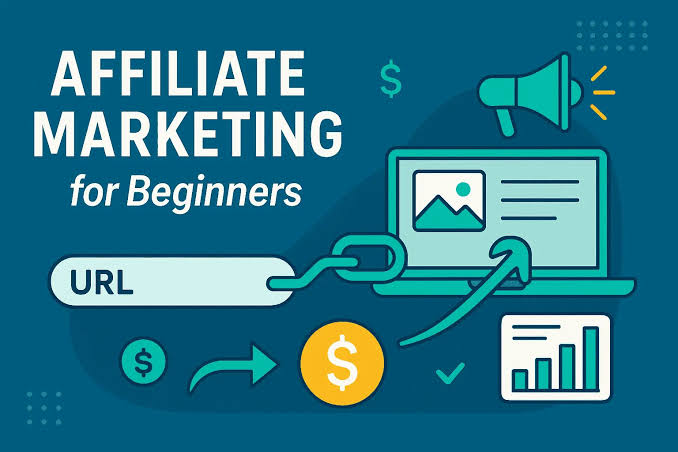
Affiliate marketing has become one of the most talked-about ways to earn money online, but the sheer volume of advice, opinions, and conflicting strategies can leave beginners more confused than when they started. This guide consolidates everything a true beginner needs to know into one comprehensive resource, covering the fundamentals, the setup process, the strategies that actually work, and the pitfalls to watch for as you build your affiliate marketing foundation.
Understanding the Core Concept Before You Start
Affiliate marketing works on a simple principle: you recommend products or services to your audience using a unique tracking link, and you earn a commission whenever someone makes a purchase or takes a qualifying action through that link. You never handle inventory, shipping, customer service, or payment processing. Your role is entirely focused on connecting the right people with the right products through helpful, trustworthy content.
This simplicity is exactly what makes affiliate marketing appealing to beginners, but it can also be misleading. While the mechanics are simple, building an audience that trusts your recommendations enough to actually click and buy takes real, sustained effort. Beginners who understand this upfront tend to have far more realistic expectations and, as a result, stick with the process long enough to see results.
The Two Paths: Content-First vs. Traffic-First
Most beginner affiliate strategies fall into one of two broad approaches. The content-first approach involves building a blog, YouTube channel, or social media presence around a specific topic, publishing consistently helpful content, and naturally incorporating affiliate links as genuine recommendations within that content. This approach tends to build long-term, compounding traffic, particularly when combined with search engine optimization, but it requires patience since results often take months to materialize.
The traffic-first approach involves using paid advertising, such as Facebook or Google Ads, to drive immediate traffic directly to affiliate offers or landing pages. This approach can generate faster results but requires upfront capital, a strong understanding of ad platforms, and careful tracking to ensure your ad spend does not exceed your commission earnings.
For true beginners, especially those without existing marketing experience or capital, the content-first approach is generally recommended because it carries lower financial risk and builds a durable asset, your content library and audience, that continues generating value over time.
Choosing Your Niche the Right Way
Your niche is the foundation everything else is built on, so it deserves careful thought rather than a rushed decision. A good niche for a beginner typically sits at the intersection of three factors: genuine interest or knowledge, which keeps you motivated to create content consistently; commercial viability, meaning there are actual products with affiliate programs relevant to the topic; and audience demand, meaning people are actively searching for information, reviews, or recommendations in that space.
Overly broad niches, like “health” or “money,” are difficult for beginners to compete in due to intense competition from established websites and brands. Narrower niches, such as “home workout equipment for small apartments” or “budget travel for solo female travelers,” allow you to build authority faster and attract a more targeted, higher-converting audience.
Setting Up Your Platform
Once your niche is chosen, you need a home base for your content. While free platforms are a viable starting point, many beginners eventually invest in a self-hosted website using WordPress, which offers far more control, credibility, and long-term flexibility than free blogging platforms or purely social-media-based strategies. A self-hosted site typically requires a domain name and hosting plan, both relatively inexpensive investments, along with a clean, fast-loading theme suited to content publishing.
If budget is a concern, starting on a free platform like YouTube or a free blog tier is completely reasonable, with the option to migrate to a self-hosted setup once initial traction is established.
Joining Affiliate Programs
With your platform in place, the next step is joining affiliate programs relevant to your niche. Beginners can start with broad, easy-to-join programs like Amazon Associates, then gradually add more specialized programs as their content library grows and their niche focus sharpens. Affiliate networks like ShareASale, CJ Affiliate, and Impact provide access to hundreds of merchants through a single sign-up, simplifying the process of finding relevant programs.
When evaluating programs, look beyond the advertised commission rate to consider cookie duration, average order value, and whether the program offers recurring commissions. A lower percentage on a higher-value or recurring product can significantly outperform a flashy but low-value one-time commission.
Creating Content That Converts
Content is the engine of affiliate marketing, and beginners often underestimate how much thought needs to go into making content genuinely persuasive rather than just informative. Effective affiliate content typically falls into a few proven formats: in-depth reviews that cover both pros and cons honestly, comparison articles that help readers choose between competing products, buying guides that walk through how to select the right product for different needs, and tutorial or how-to content that naturally recommends tools or products as part of the solution.
Honesty and transparency are critical to conversion, somewhat counterintuitively. Audiences are savvy and can quickly detect content that only praises a product without acknowledging any drawbacks. Reviews that mention limitations alongside genuine strengths tend to convert better because they feel more credible and trustworthy.
Understanding SEO Basics
Search engine optimization deserves special attention for beginners because organic search traffic remains one of the most reliable, cost-effective long-term traffic sources for affiliate content. At a basic level, SEO involves researching keywords your target audience is searching for, incorporating those keywords naturally into your titles, headers, and content, and structuring your pages in a way that is easy for both readers and search engines to understand.
Beginners should prioritize what are known as “buyer intent” keywords, phrases like “best,” “review,” “vs,” or “top,” which signal that the searcher is close to making a purchasing decision. These keywords typically convert at much higher rates than informational searches, even if they attract somewhat lower search volume overall.
Building Trust and Disclosure Practices
Trust is the currency of affiliate marketing. Every recommendation you make either builds or erodes your audience’s confidence in your judgment. Beginners should make honest, helpful recommendations a core habit from day one, only promoting products they have genuinely researched or used and believe will serve their audience well.
Legal disclosure is equally important and non-negotiable. Regulations such as the FTC guidelines in the United States require clear disclosure whenever content includes affiliate links, typically through a brief statement near the top of the content or directly beside the relevant links. Far from hurting conversions, transparent disclosure often builds additional trust because it demonstrates honesty about how your content is monetized.
Common Beginner Mistakes to Avoid
New affiliates often fall into a handful of predictable traps. Promoting too many unrelated products dilutes your credibility and confuses your audience about what you actually stand for. Focusing exclusively on high commission rates rather than product quality or audience relevance tends to backfire through poor conversion rates and damaged trust. Neglecting content quality in favor of quantity, publishing thin, low-effort posts purely to have more affiliate links live, rarely performs well in search rankings or with readers.
Perhaps the most common mistake is giving up too early. Because organic traffic and audience trust both take time to build, many beginners abandon their efforts just before momentum would have started to compound, often within the first three to six months.
Tracking Performance and Improving Over Time
Successful beginners treat affiliate marketing as an ongoing experiment rather than a set-it-and-forget-it activity. Regularly reviewing analytics, both from your website traffic tools and your affiliate program dashboards, reveals which content pieces are driving the most clicks and conversions. This data should directly inform your content strategy going forward, helping you produce more of what works and refine or retire what does not.
Diversifying Income Streams Over Time
While beginners typically start with one primary platform and a handful of affiliate programs, long-term success often involves diversification. This might mean expanding into additional content platforms, such as adding YouTube alongside an existing blog, building an email list to reduce reliance on search and social traffic, or adding complementary income streams like sponsored content or digital products once an audience has been established.
Essential Tools for Beginners
You do not need an expensive toolkit to get started, but a handful of free or low-cost tools can significantly streamline your workflow. A keyword research tool, even a free one like Google Keyword Planner or the free tier of Ubersuggest, helps identify what your audience is actually searching for. A basic analytics platform, such as Google Analytics, shows you where your traffic comes from and how visitors behave once they land on your content. An email marketing platform with a free starting tier lets you begin building a subscriber list from day one. Finally, a simple spreadsheet or project management tool helps you plan content topics, track which affiliate programs you have joined, and monitor performance metrics in one place, preventing important details from slipping through the cracks as your business grows.
The Mindset Shift That Separates Successful Affiliates
Perhaps the most overlooked “everything you need to know” for beginners is not tactical but psychological. Affiliate marketing rewards patience, consistency, and a genuine focus on serving an audience rather than simply extracting commissions from it. Beginners who treat their content as a long-term asset, continually improving older posts, expanding topic coverage, and refining their understanding of their audience’s needs, tend to significantly outperform those chasing quick wins or the latest viral tactic.
It also helps to reframe early setbacks, such as low traffic or a lack of conversions in the first few months, not as failure but as expected stages of a normal growth curve. Nearly every successful affiliate marketer went through a period of minimal results before their content and audience reached a critical mass where growth started to compound. Understanding this in advance can be the difference between quitting during the slow early phase and pushing through to the point where the business starts to genuinely take off.
Final Thoughts
Affiliate marketing offers a genuinely accessible path into online entrepreneurship, but success depends on treating it as a real business rather than a quick side project, complete with a strategy, a target audience, and a long-term growth plan. By choosing a focused niche, building a solid content platform, joining relevant affiliate programs, creating genuinely helpful and honest content, and consistently tracking and refining your approach, beginners can build a sustainable, growing income stream over time. The path requires patience, particularly in the early months, but the fundamentals covered in this guide provide a solid foundation for turning affiliate marketing from a concept into an actual working business.